Featured Product
Raven Floats
Steelhead fishing floats used for center pin and float fishing
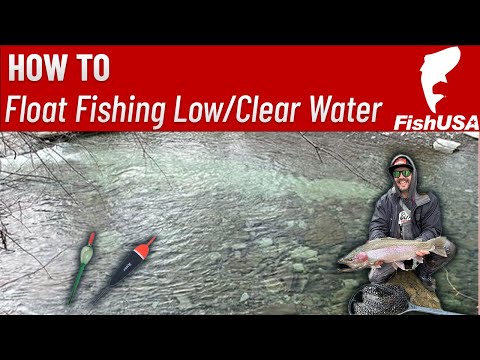
""the floats that I personally use are drenin and Raven floats uh they're going to be anywhere from 2 G to 4 G in Low Clear Water""
Mastering Low and Clear Water: A Complete Float Fishing Guide for Steelhead
When steelhead season rolls around and water levels drop, many anglers pack up and head home. The pros, however, know that low and clear conditions simply demand a smarter approach — one built on stealth, finesse, and deliberate gear selection. Josh from the FishUSA Pro Shop walks through his own low-water setup, and his advice is as practical as it gets for Great Lakes tributary anglers looking to stay productive when the water gets skinny and gin-clear.
Whether you're a dedicated centerpin enthusiast or a spinning rod convert, the principles that govern success in tough water conditions remain largely the same: go lighter, go clearer, and go slower. Here's a breakdown of everything you need to get your rig dialed in.
Start With the Right Line — Visibility Matters More Than You Think
Line selection in low and clear water isn't just a minor detail — it can be the difference between a day full of strikes and a frustrating blank. Josh approaches this differently depending on his rod setup, but the guiding philosophy is consistent: keep it clear, keep it subtle.
For centerpin fishing, Josh relies on 14 lb test as his main line. "That might sound heavy," he acknowledges, "but you have to think about line diameter differences. It's very thin and very supple." On the spinning rod side, he drops to 10 lb test — still heavier than some anglers might expect, but chosen specifically because it doesn't suffer the same coiling issues that plague heavier monofilaments on spinning reels.
"I do not use high-viz in low and clear water. I personally like to use clear — I think it just makes us a hair bit more stealthy than somebody with high-viz line."
The takeaway here is straightforward: when fish can see every detail in the water column, your line is part of the presentation. Choosing clear monofilament across the board is a low-cost, high-impact adjustment that costs you nothing in performance.
Mentioned in This Article
Drennan Crystal Floats
Clear, stealthy fishing floats for low and clear water steelhead fishing
Float Selection: The Case for Stealth Over Visibility
A float does more than suspend your bait — it interacts with light, casts shadows, and signals to wary steelhead that something isn't quite right. In low and clear conditions, float choice carries surprising tactical weight.
Josh's go-to floats are Drennan and Raven models, sized between 2 and 4 grams. The key distinction between the two comes down to transparency. Drennan floats are clear, allowing light to pass through them and dramatically reducing the shadow they cast on the riverbed below.
"The Drennan floats are a little bit stealthier. If you're fishing deeper holes, you can get away with the Raven ones — but they're solid, they aren't see-through, so you're just not going to have as much stealthiness. They might cause a shadow where the clear ones might not."
Both float types require tubing to secure them to the line, and here Josh keeps things simple: Drennan offers a variety pack with multiple sizes that fits both its own crystal floats and Raven floats interchangeably. It's a small organizational detail that saves time on the water.
Shot, Swivels, and the Architecture of a Finesse Rig
Once your float is set, the construction of the rig below it determines how naturally your bait drifts through the water column. Josh builds his rigs with a layered approach — thoughtful, minimal, and designed to avoid unnecessary interference with the presentation.
For split shot, Josh reaches for Raven's soft shot. The reason is practical and precise: the shot grips the line firmly enough to stay in place, but not so aggressively that sliding it up and down damages or frays the monofilament. In low and clear conditions, he limits himself to a few key sizes — AA, BB, and No. 1 — which range from roughly 0.75 to 3 grams. That's typically more than enough to properly load a 2- to 3-gram float.
Below the shot sits a micro swivel — a small but important component that serves as the junction point between the main line and the leader. This is also the reason heavier main line makes sense. The swivel needs to be tied to something with enough strength to handle the connection point under the stress of fighting a fish.
From the swivel, Josh runs a fluorocarbon leader — and this is where the finesse really comes into play. In low and clear conditions, he drops to 4 to 6 lb test, with a preference for the lighter end of that range. He's even seen accomplished Pennsylvania tributary anglers fish leaders as light as 2 lb test.
"Four is usually where I keep it. I feel like you still have enough strength to land a big fish, but you're finesse enough to cover the tactics of low and clear water steelhead fishing."
One critical caveat: always match your leader strength to your rod's rating. Running 4 lb fluorocarbon through a rod designed for heavier line is a recipe for break-offs and lost fish.
Mentioned in This Article
Raven Split Shot Assortment
Soft split shot weights that grip line without fraying, in sizes AA, BB, and #1
The Secret Weapon Most Anglers Ignore: Line Dressing
Here's where Josh separates himself from the crowd. Among all the gear he carries, one product stands out as a largely overlooked advantage — a line dressing called Mucilin.
Mucilin is applied to the main line above the float, and its purpose is elegant in its simplicity. Over time, monofilament absorbs water and begins to sink, which causes drag on the float and forces the angler to mend more aggressively. Mending means line movement, and line movement in low and clear water means disturbance — exactly what you're trying to avoid.
"If you have Mucilin on the line, you don't have to move your float or anything — the line just pops off the water. I feel like it gives me a little bit more stealth when I'm mending my line, if my line is touching the water."
For centerpin anglers especially, where line management and mend efficiency are central to the technique, Mucilin can meaningfully improve presentation quality over a long day on the water. It's an inexpensive addition that speaks to the kind of marginal gains that define consistent anglers.
Bait Selection: Building a Versatile Arsenal
With a stealthy rig assembled and in the water, bait selection becomes the next critical variable. Josh approaches this with a "base plus wild card" philosophy — lead with natural, subtle presentations, but never leave the house without a few surprises.
Egg Sacks
Traditional spawn bags remain a staple of Great Lakes steelhead fishing for good reason — they work. Josh carries a range of colors, with an emphasis on pastels and naturals for low and clear conditions. Lilac, purple, and blue are among his favorites for finesse situations.
But he doesn't stop there. "I will also carry a couple bright ones on me as a wild card," Josh explains. "Even in low and clear water, that steelhead will sometimes bite something bright. It's always good to have a wild card in your back pocket." To manage multiple colors without juggling a half-dozen containers, he uses a dedicated egg sack holder that clips directly to his vest — a small organizational tool that streamlines access in the heat of the moment.
Single Eggs
For an even more minimal presentation, Josh turns to single eggs — specifically, Atlas Mike's King Eggs. Fished on a size 16 or 18 hook, the goal is to bury the hook point inside the egg as much as possible, leaving little to no metal exposed. The result is a clean, natural-looking drift that can trigger fish that have grown suspicious of more visible rigs.
Beads
Bead fishing has grown into one of the most refined and effective tactics in the steelhead world, and it shines especially bright in low and clear conditions. Josh prefers 6mm beads for Pennsylvania's smaller tributaries — a deliberate choice based on local water scale. Anglers on larger Great Lakes rivers might opt for 8mm, but matching bead size to the river matters.
His go-to colors are Glow Roe and Mottled Peachy King — both chosen for their natural appearance and ability to imitate loose steelhead eggs convincingly. Hook selection for bead fishing depends on your rod and leader setup: Raven Specialist hooks, with their thinner wire, are ideal for lighter rods and 2 to 4 lb leaders, offering easier penetration on the hook set. Wide-gap hooks pair better with stouter rods and heavier leaders, but require more backbone to drive home effectively.
Mentioned in This Article
Raven Specialist Hooks
Thin wire hooks ideal for bead fishing with light line for steelhead
Jigs: The Aggression Option
When everything else has failed and the fish seem to be locked up tight, Josh turns to jigs — and he's refreshingly candid about why.
"This is a complete aggression bite. I am trying to get the most angry fish in the group of fish that I'm around. I'm trying to get him to peel off the pack and come after this and hunt it down."
His jig color palette in low and clear water stays natural: whites, olives, and blacks. The goal isn't to shock the fish into biting — it's to trigger a territorial or predatory response from the most aggressive individual in a pod. Jigs are his last resort, but when the conditions demand it, they can be the only thing that works.
Scent: The Overlooked Edge
Alongside jigs, scent application is another tactic Josh feels is significantly underutilized by most steelhead anglers. In low and clear conditions, adding scent to your presentations serves two distinct purposes: it masks human odor transferred to the bait during rigging, and it introduces an olfactory trigger that may push hesitant fish over the edge.
Josh applies scent to egg sacks, beads, and jigs alike — with one important exception. When scenting jigs, he applies product only to the head and thread wraps, never to the marabou fibers. "If you put any scent on the marabou, it will mat the fly down and it won't give it the good action," he cautions.
His preferred products are BnR's Shot System and Pro-Cure's Steelhead Combo. Both have proven effective on the water, and both share one remarkable quality: exceptional longevity. "I'm pretty sure I have jigs from last year that still have this scent on them," Josh notes. "It like never leaves."
Mentioned in This Article
Atlas Mike's King Salmon Eggs
Preserved single salmon eggs used on size 16 or 18 hooks for steelhead
Egg Cure: The Final Detail That Wins the Day
In heavily pressured conditions — when multiple anglers are working the same run — the quality of your bait can ultimately determine who goes home with fish. Josh's answer to this challenge is the Pautzke Fire Cure, which he considers the best egg cure available for low and clear water fishing on Pennsylvania tributaries.
"I've seen this outproduce fresh eggs. I've seen it outproduce other people's cures. And it's just simple — it's idiot proof. You just dump it on, 24 hours later your eggs are cured and you tie them into your favorite spawn netting."
Beyond its fish-catching effectiveness, the Fire Cure also extends the shelf life of cured eggs significantly — keeping them fresh and usable in the refrigerator for several months. For anglers who like to prepare in advance and avoid last-minute scrambles, that kind of longevity is genuinely valuable.
Putting It All Together
Low and clear steelhead fishing rewards preparation, patience, and the willingness to refine every detail of your approach. From choosing clear monofilament and transparent floats, to dropping your leader to 4 lb fluorocarbon and dressing your line with Mucilin, every element of the system Josh describes serves a single goal: presenting bait as naturally and invisibly as possible to fish that can see everything.
The bait selection philosophy — pastels first, bright colors as a wild card, beads and single eggs for finesse, jigs for aggression — gives anglers a flexible response to changing fish behavior throughout the day. And the finishing touches, from scent application to quality egg cure, represent the marginal gains that separate good anglers from great ones when conditions get tough.
Low and clear water isn't a reason to stay off the river. With the right gear and the right mindset, it's an opportunity to outfish everyone else on the water.
Mentioned in This Article
Mucilin Line Floatant Dressing
Line dressing applied above the float to prevent monofilament from sinking in low clear water
