Featured Product
Seaguar Invizx Fluorocarbon Fishing Line 8lb
8lb Seaguar brand fluorocarbon fishing line used as leader material for steelhead float fishing
"I use 8-lb Seaguar brand fluoro. And that's just what I use. I think it works great. It's perfect. Doesn't fray much."
Chasing Chrome: A Day of Ohio Steelhead Fishing Under a Crystal-Clear Sky
There are days on the river when everything clicks — the fish are running, the conditions cooperate, and patience pays off in spectacular fashion. Then there are days like this one, when the water runs low and gin-clear, the fish are skittish, and success demands persistence, adaptability, and a willingness to stay one more cast longer than your instincts tell you to. For Ohio-based angler and content creator Peresie Outdoors, a recent session targeting steelhead on a familiar stretch of river delivered both the frustration and the triumph that define this sport at its finest.
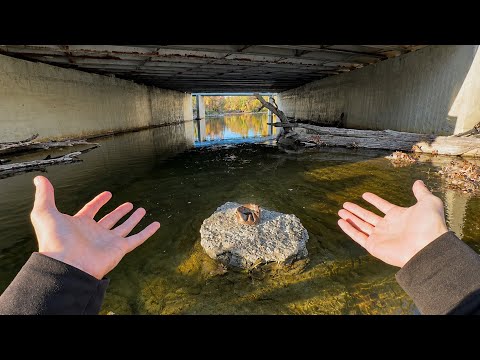
Armed with a carefully assembled float rig, a selection of colorful beads, and a quarter-ounce Little Cleo spoon, Peresie hit the same river stretch he had fished in his previous outing — only this time, the conditions were dramatically different. Where the water had carried a slight murk before, it now flowed slow, shallow, and crystal clear. Steelhead were visible and moving, but catching them would be an entirely different story.
Reading the River: When Conditions Change Everything
Experienced steelhead anglers know that water clarity can be both a gift and a curse. On one hand, clear water allows you to spot fish and confirm they're present. On the other, those same fish can see you, your line, and every detail of your presentation just as easily. Low, slow flows can make those fish even spookier.
Arriving at the bridge pool, Peresie immediately noticed fish moving through the system — a promising sign that the run was active. But visible fish and cooperative fish are rarely the same thing. The angler quickly acknowledged that his approach would need to evolve throughout the session.
"It's very low and clear today, so the conditions are a little bit different from last video. Actually, way different cuz it was a little murky, not crazy murky, but not crystal clear like this. So, we're going to have to change up our tactics and see what these fish like."
This kind of real-time analysis and willingness to adapt separates successful steelhead anglers from those who go home empty-handed. The fish were there. The question was simply: what were they willing to eat?
Mentioned in This Article
Shimano Stradic 2500 Spinning Reel
2500 size Shimano Stradic spinning reel used as part of the steelhead float fishing combo
Building the Perfect Steelhead Float Rig
Before hitting the water, Peresie took time to walk viewers through his go-to steelhead setup — a float rig he showed because viewers asked for it. It's a thoughtfully assembled system that balances sensitivity, stealth, and durability, and it begins with one fundamental choice: the leader material.
Fluorocarbon Leader
Peresie opts for 8-pound Seaguar fluorocarbon as his leader material, and it's not an arbitrary decision. Fluorocarbon is nearly invisible underwater, resistant to abrasion, and sinks faster than monofilament — qualities that matter enormously when drifting a bead through a clear-water run where fish are easily spooked.
"I use 8-lb Seaguar brand fluoro. I think it works great. It's perfect. Doesn't fray much."
The leader measures three to four feet in length and is attached to the main line via a small barrel swivel — a simple but important connection point that prevents line twist during the drift and provides a clean transition between mainline and leader.
The Float
Peresie's float of choice is a 5.5-gram Raven float, secured to the leader using small sections of silicone tubing threaded onto the line. The float is slid into place between two pieces of tubing, allowing it to be repositioned easily when adjusting depth — an essential feature when prospecting through runs of varying depth.
The Bead and Hook Setup
At the heart of this rig is a technique that has revolutionized steelhead fishing across the Pacific Northwest and Great Lakes regions: the pegged bead. Peresie threads a colored bead — starting with a light chartreuse — onto the leader above the hook and fixes it in place using a small piece of rubber or silicone material pushed through the bead's hole. This clever peg system allows the bead to slide freely under light pressure but locks in place during a drift, holding it at a fixed distance above the hook.
"One key thing about this — I like putting my bead about 2 inches above the hook. Anywhere from 1 and a half to roughly 3 is fine, but I prefer the 2-inch mark."
The hook itself is a size-six red octopus circle hook — a style well-suited to bead fishing because it tends to catch in the corner of a fish's mouth rather than deep in the throat, making catch-and-release easier and more humane. The red color, while aesthetically pleasing, is largely a matter of personal preference according to Peresie, who notes he hasn't found a meaningful difference between red and standard hook colors in terms of fish attraction.
Weighting the Rig
To balance the float and get the rig down to the fish's level, Peresie adds split shots to the leader above the bead. The number of split shots — typically three to six — is dictated by the float's weight rating. The goal is a perfectly balanced float that sits upright and plumb in the water column, neither leaning to one side nor riding too high. A properly weighted float is both a visual aid and a strike indicator, dipping decisively when a fish intercepts the bead.
The Rod and Reel Combo
Completing the setup is a pairing that Peresie describes with barely concealed enthusiasm: a Shimano Stradic 2500 reel mounted on a 10-foot, 6-inch Lamiglas float rod. The long rod affords superior line management during drifts, allowing the angler to mend line and control the float's speed across different current seams. The Stradic reel's smooth drag system is equally important when a fresh steelhead makes its first explosive run.
"It's one of my favorite combos. It's very, very nice if you're looking into getting into more expensive combos, but overall, I think this is my favorite combo I've ever had — and it just treats me really well and always makes fighting the fish fun."
The Waiting Game: Patience Tested on Clear Water
With his chartreuse bead rig rigged and ready, Peresie began working the bridge pool — a spot that had clearly earned its reputation, with steelhead visibly finning and moving through the system. The early signs were encouraging. An early bobber-down sent a jolt of adrenaline through the session, though the fish didn't connect. After that brief flicker of hope, the bites dried up entirely.
Thirty minutes of fruitless drifting is enough to test any angler's resolve, particularly when the fish are right in front of you. Clear water conditions were clearly putting the chrome-sided steelhead on high alert, making them reluctant to commit to anything that didn't look perfectly natural. Recognizing that the bead wasn't producing results in these conditions, Peresie made a tactical pivot.
Mentioned in This Article
Lamiglas 10'6" Float Fishing Rod
10 foot 6 inch Lamiglas float fishing rod paired with the Shimano Stradic for steelhead
Switching to the Spoon: A Last-Cast Miracle
After 30 minutes with nothing, Peresie tied on a quarter-ounce Little Cleo spoon in a rainbow trout pattern — a classic hardware choice for Great Lakes steelhead that has accounted for countless fish over the decades. The wobbling, flashing action of a small spoon can trigger reaction strikes from otherwise finicky fish, appealing to aggression rather than hunger.
But the spoon, too, seemed destined to disappoint. Cast after cast came back empty, and the fish continued to hold deep and disinterested. It was at the precise moment of near-surrender — when doubt creeps in and the drive home starts to seem more appealing than one more cast — that the spoon found its mark.
"I literally was going to give up on the spoon. Immediately when that happened, I got — oh, it's a good one. It's a really good one. Holy crap."
What followed was the kind of fight that reminds anglers exactly why they endure hours of cold, slow sessions. A large buck steelhead — a male fish, broad-shouldered and chrome-bright — had hammered the Little Cleo and immediately launched into the headshaking, line-peeling run that makes this species legendary among freshwater anglers. Fighting a fish of this caliber solo, with no net handler, is an exercise in controlled chaos.
"Hardest fighting fish out there. This is a good one, too. It's going to be hard to land him on my own."
After an extended battle, the fish came to the net — a magnificent buck that Peresie estimated at 25 to 26 inches, his personal best for the year. The fish was photographed, admired, and gently released back into the current.
"Biggest of the year for me, baby. Let's go. Can't believe this, guys."
Back to the Float: The Orange Bead Makes Its Case
With one fish on the board and momentum restored, Peresie returned to his float rod and the technique he'd set out to showcase. The chartreuse bead was retired in favor of a lighter orange — a subtle but meaningful change that would prove decisive. Color selection in bead fishing is part science and part intuition, influenced by water clarity, light conditions, and the mysterious preferences of the fish themselves. In clear, low water, more natural or subdued tones often outperform brighter options, though orange — suggesting salmon eggs, a natural food source for steelhead — tends to remain productive across a wide range of conditions.
The pattern of the day reasserted itself almost immediately: patience was required. But Peresie held his position and kept working the run methodically, letting the float carry the orange bead through the most likely holding lies. Then, once again at the edge of giving up, the float stabbed under the surface.
"I switched to an orange bead. I was giving up just like last time, and this thing just freaking smoked it. Absolutely smoked it. Sick bobber down."
The fish — a chrome hen loaded with eggs — made several strong runs before tiring enough to be coaxed to the net. The bead was lodged firmly in the corner of her mouth, a textbook hookset that illustrated exactly why the circle hook and bead combination works so effectively. A chrome steelhead hen heavy with roe, caught on an orange bead in clear Ohio water: it doesn't get much more quintessentially Great Lakes than that.
"That bead is in the corner of that fat fish's mouth. That is how you catch a steelhead on a bead."
Like the buck before her, the hen was quickly revived and returned to the river to continue her upstream journey.
Mentioned in This Article
Split Shot Sinker Assortment Fishing Weights
Split shot sinkers used on the shot line below the float to properly balance the rig
Lessons from the River: Adaptability, Persistence, and Timing
Two fish in a day of clear, low-water steelhead fishing is a result many anglers would celebrate unreservedly. The conditions were difficult, the fish were spooky, and success required switching tactics, changing bead colors, and refusing to quit at precisely the moments when quitting seemed most reasonable. These are the lessons that the river teaches most reliably.
The session also underscored one of steelhead fishing's most fundamental truths: the fish will eventually bite. Location matters enormously — finding an active run full of chrome fish is half the battle — but once you've found them, the question is simply one of presentation and persistence.
"You just got to go out there and find them in your river. It's definitely really difficult to find them, but once you find them, just switch your lure, switch your bait, switch whatever you're using, and find what they like — and they'll eventually bite."
Looking ahead, Peresie noted that Ohio's steelhead rivers could benefit significantly from a good rain event to raise water levels, improve flow, and push more fish into the system. Low, clear conditions, while beautiful, concentrate fish and make them harder to catch. A few days of elevated, slightly colored water would change the dynamic dramatically — drawing in fresh chrome from Lake Erie and putting the fish in a far more aggressive, willing-to-feed mood.
Planning Your Own Ohio Steelhead Trip
Ohio's Lake Erie tributaries — rivers like the Chagrin, Grand, Vermilion, and Rocky — host some of the most accessible steelhead fishing in the Great Lakes region. Fish begin entering the systems in earnest in October and continue running through the winter and into spring, with peak numbers typically occurring after significant rainfall events that raise river levels and trigger upstream movement.
For anglers looking to copy Peresie's approach, his gear list is short: a 10-foot-6 Lamiglas float rod with a 2500 Shimano Stradic, a 3 to 4 foot leader of 8-lb Seaguar fluorocarbon off a small barrel swivel, a 5.5-gram Raven float on silicone tubing, a pegged bead about 2 inches above a size 6 red octopus circle hook, and enough split shot to make the float sit upright. A 1/4 oz Little Cleo spoon is worth carrying when the float bite stalls, as this session showed.
Above all, success on Ohio's steelhead streams requires the willingness to stay flexible, read the conditions honestly, and trust that the fish are there — even when they refuse to prove it. On this particular day, beneath a bridge somewhere in Ohio, two spectacular chrome steelhead reminded one persistent angler exactly why the chase is always worth it.
Based on a video by Peresie Outdoors on YouTube.
